Cold Climate Solar: How Panels Perform in Permafrost and Snow-Rich Zones
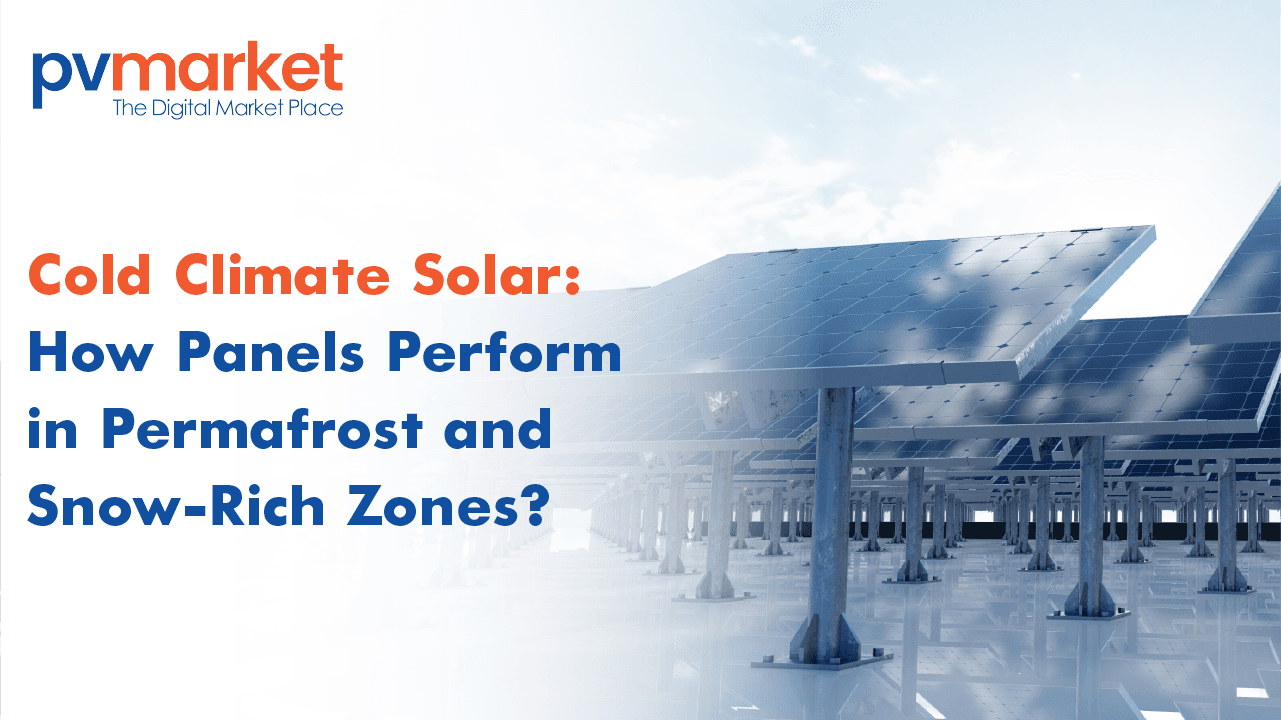
They are being installed everywhere, in all
parts of the world, not only where the sun is very strong. Homes in Finland, buried under snow piles,
solar panels in Sweden and buildings in the Arctic are generating solar
energy. Solar technology is advancing so
quickly that developers are installing panels where weather issues stopped them
in the past. Observations show that if
solar panels are properly maintained, they are capable of functioning
efficiently in tropical areas.
Do Solar Panels Work in the Cold?
Yes—and often better than expected. While
sunny days help, solar panels don’t need heat to function. Colder temperatures
can improve the efficiency of solar panels. Every drop in temperature
can boost performance slightly, by about 0.3% to 0.5% per degree Celsius
below the standard 25°C test condition. In very cold but sunny environments,
panels can operate 10–12% more efficiently than in hotter climates. So,
while a panel in Texas might get more sunlight hours, a panel in northern
Sweden could generate power more efficiently when the sun does shine.
Factors Affecting Solar Panel
Performance in Cold Climates
Several environmental and technical
elements influence how well a solar panel performs in snowy or subzero
environments:
- Sunlight Availability:
High-latitude regions experience limited daylight in winter, but very long
daylight in summer—creating uneven but seasonally compensating generation.
- Snow Cover: Heavy snow can block
sunlight and reduce output. However, most panels self-clear or are
installed at angles that help snow slide off.
- Albedo Effect: Snow-covered ground
increases reflectivity, boosting performance of bifacial panels
that capture light from both sides.
- Wind Chill & Airflow: Cold
winds cool the panels, reducing thermal resistance and improving
efficiency.
- Dust and Ice: In areas where snow
melts and refreezes, frost or ice buildup can briefly block solar input
unless the panels are treated with anti-icing coatings or cleared
manually.
Understanding these variables helps in
designing systems that make the most of both the climate's challenges and
advantages.
What About Snow? Doesn’t It Block the
Sun?
It can—but it's not a dealbreaker. Snow can
temporarily block sunlight, reducing power output. But engineers and installers
have developed smart ways to work around this:
- Tilted panels help snow slide off
naturally.
- Bifacial panels (which absorb
sunlight from both sides) still work when there's snow on the front—thanks
to the light reflected off the snowy ground.
- Some panels now come with special coatings that help
snow slide off faster.
- In high-snow areas like northern Japan, systems use robotic
brushes or brooms to clear snow when needed.
Surprisingly, annual energy loss from
snow is often under 10–15%, and smart system design can reduce this even
further.
Design and Installation Considerations
for Cold Climates
Designing solar in snow-rich or frozen
regions requires both innovation and precaution. Key considerations include:
- Foundation Type: In permafrost
zones, traditional mounts can cause ground thawing. Engineers use helical
screw piles that anchor deep into stable frozen soil, or ballasted
systems to avoid ground disturbance.
- Panel Angle and Orientation:
Steeper tilt angles (30° to 60°) help shed snow and improve winter
irradiance capture. East-west or vertical bifacial arrays perform
well with low sun angles.
- Racking Height: Raising panels
allows airflow to prevent ground warming and accommodates snowdrifts
without burying the modules.
- Snow Load Ratings: Equipment must
be rated to handle heavy accumulations—up to several hundred kg/m² in some
regions.
- Wiring and Components: Cables and
connectors must be frost-resistant. Enclosures should be weather-sealed
and easy to access during snow periods.
- Remote Monitoring: Because access
can be difficult in winter, IoT-based monitoring and drones help
track performance and identify problems quickly.
These strategies are increasingly standard
in Arctic and Alpine solar deployments, ensuring both safety and long-term
performance.
Installing Solar in Frozen Ground? It’s
Possible
One big challenge in Arctic areas is the
permafrost—frozen ground that can shift or melt if disturbed. Traditional
foundations don’t work well here, but engineers are using clever solutions:
- Helical screw piles that anchor
deep into stable frozen layers.
- Ballasted systems (weighed down,
not drilled) to avoid disturbing the ground.
- Raised mounting structures to allow
air to flow beneath the panels, keeping the ground from warming up too
much.
These techniques have been used in places
like Inuvik, Canada, and Kotzebue, Alaska, where solar is now reducing the need
for expensive and polluting diesel generators.
Long Summer Days Make Up for Dark
Winters
Yes, Arctic regions have long, dark
winters. But they also have extremely long summer days—sometimes up to
24 hours of sunlight!
- In Tromsø, Norway, nearly 70% of solar generation
happens between April and August.
- In Alaska, some solar systems now produce as much annual
energy as those in Germany—thanks to longer summer days and high
cold-weather efficiency.
- Vertical and east-west-facing solar panels are also helping capture more light during low-angle sunrise
and sunset hours.
Real-World Example: Solar in the Arctic
Circle
In Kotzebue, Alaska, a town 33 miles
above the Arctic Circle, a 576-kW solar array was built to reduce diesel use.
Despite extreme cold and 60 inches of annual snow:
- The solar system cuts over 100,000 gallons of diesel
every year.
- It runs reliably, with just a small loss in output during peak
snow months.
- Local crews use drones and thermal cameras to monitor
performance and decide when snow clearing is needed.
This project is part of a growing trend of hybrid
solar-plus-storage systems helping remote communities cut costs and reduce
pollution.
Environmental and Economic Benefits
Installing solar in cold and remote regions brings many benefits:
- Reduces greenhouse gases, especially when replacing diesel
fuel, which emits 2–3 kg of CO₂ per liter.
- Lowers electricity costs for off-grid communities, where power
can cost $1 to $2 per kWh from diesel.
- Creates local jobs in construction, monitoring, and
maintenance.
- Qualifies for public funding, such as the U.S. Inflation
Reduction Act or Canada’s Indigenous Clean Energy Initiative.
The Future of Cold-Climate Solar
As solar panels become smarter and more
adaptable, cold climates are no longer off-limits—they’re a new frontier.
Innovations like AI-driven snow detection, portable modular racking, and
climate-adaptive foundations are helping solar grow in places it once couldn't.
Beyond technology, cold-climate solar power is also about equity. Clean,
affordable power should reach every corner of the globe—from the tropics to the
tundra.
Final Thought: Cold Is No Longer a
Barrier—It's an Opportunity
These days, cold-climate solar projects are
showing that permafrost, snow, and ice are not barriers—they're engineering
puzzles with practical solutions. With the right design, planning, and
materials, solar can generate clean electricity even in the most extreme
conditions, making the global energy transition truly inclusive.
Leave a Comment
Comments
No comments yet. Be the first to comment!